
Service
Garage Door Opener Installation for Cedar Park Homes
Cedar Park homes built between 1980 and 2014 often run openers original to the house. See why replacement makes sense now and what the install involves.
- Licensed & Insured
- Same-Area Service Calls
- Upfront Pricing
What Happens When You Call
-
1
Call or Request a Quote
Tell us what the door is doing and roughly how old the house is - that alone points us toward the likely part before a truck leaves.
-
2
On-Site Diagnosis
A tech checks the spring, cables, tracks, and opener in person and tells you plainly what is actually wrong.
-
3
Straight Price, No Surprises
You get a number before any work starts. It covers parts and labor, nothing added after the fact.
-
4
Fixed the Same Visit
Most repairs are done in one trip. If a part needs sourcing, we tell you that upfront instead of guessing.
What You Are Seeing
You press the button and the door hesitates, grinds, or doesn't move until you slap the wall switch twice. Maybe the light flickers but the motor doesn't engage, or the chain drive sounds like it's chewing gravel. In a lot of Cedar Park houses, this is the original opener still doing its job twenty-plus years later - and it's finally done.
Most of the housing stock across this service area went up between 1980 and 2014, with a median build year around 2002. That means a huge share of the openers out there are chain-drive units from the early 2000s, built with steel gears and motors rated for a service life that's already been exceeded in a lot of these garages. When one of these fails, it's rarely a simple fix - the logic board, the drive gear, and the safety sensors are all past the point where parts are worth chasing down.
What you're seeing isn't random bad luck. It's a fleet of similar-aged motors across 17 named areas in this market all approaching the same wall at roughly the same time. If your opener is struggling and your house was built in the 1990s or 2000s, you're not an outlier - you're on schedule.
Why It Happens Here
Cedar Park sits in a moderate heat band, which sounds mild compared to harsher desert climates, but garages here still see real temperature swings across a Texas summer. That heat cycling is hard on opener capacitors and belt or chain tension over the years - not dramatic failure, just steady wear that adds up faster in a garage that isn't insulated or conditioned.
The bigger factor is simply age matched to volume. With most homes here built in a fairly tight window - 1980 to 2014, median 2002 - openers installed at construction or in an early remodel are now reaching 15 to 30-plus years of service in large numbers at the same time. Manufacturers don't build residential openers to run indefinitely; internal gears, especially on older chain and screw-drive units, are designed around a duty cycle that most of these houses have already logged.
So the pattern you see across this market isn't a defect in any one brand. It's a housing stock that aged into opener replacement territory all at once, in a climate that doesn't destroy motors overnight but does wear them down steadily every summer. That combination is why opener installation calls cluster the way they do here rather than trickling in one at a time.
The Complications
Swapping an opener sounds like a bolt-on job, and sometimes it is. But a house built in the early 2000s often has a rail bracket, header clearance, or wiring setup that doesn't match a modern opener's mounting kit out of the box. Older units also frequently predate today's safety sensor standards, so a straight swap can mean adding sensor brackets or running new low-voltage wire that wasn't there before.
Another wrinkle: some homes in this price range - median household income across the area runs north of $115,000 - have doors with added insulation or heavier panels installed after the original build. A heavier door needs a properly rated opener, not just whatever unit is on sale, or you'll be back to a burned-out motor in a few years.
Here's the honest limitation: if your door itself is out of square, has a bent track, or the springs are worn, installing a new opener on top of that won't fix the underlying problem - it'll just fail faster under the added strain. We'll tell you if that's what we're looking at instead of installing an opener that's doomed from the start.
What the Repair Takes
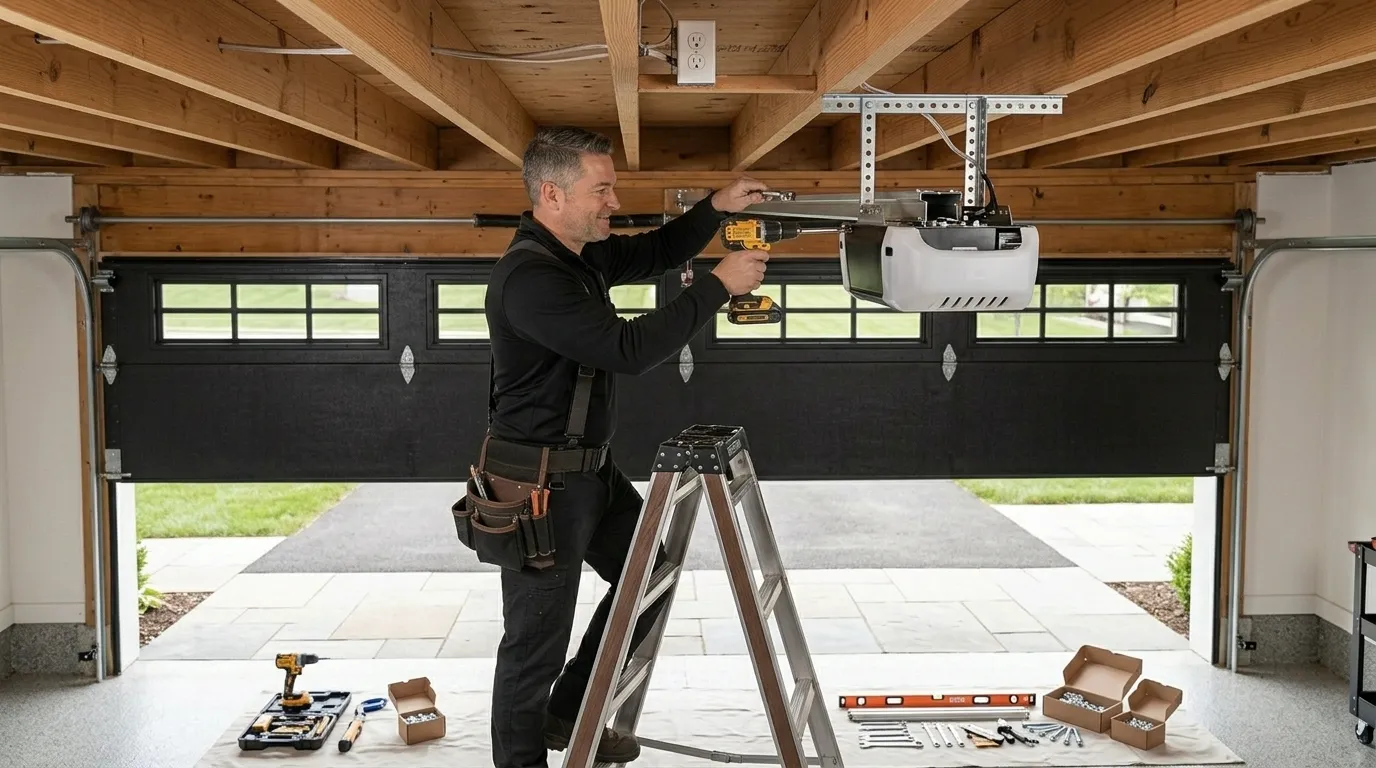
A straightforward opener installation - matching rail length, standard header clearance, existing wiring compatible - is usually a same-visit job. We pull the old unit, check the door balance and spring tension first (because a new opener fighting an unbalanced door is a short-lived opener), then mount and wire the replacement, set the travel limits, and test the safety reversal.
If your garage needs bracket changes, new low-voltage sensor wiring, or a heavier-duty motor to match an insulated door, that adds time but it's still generally a single visit. We walk you through what your specific setup needs before we start, not after.
We size the opener to your door's actual weight and drive type rather than defaulting to whatever's cheapest, because in this climate and with the age of doors we're working on, an undersized motor is the fastest way to end up back at this same repair in two years instead of fifteen.
Talk to a Technician Before You Book
Describe what the door is doing and get a straight answer on what it likely needs.
Jobs Like Yours
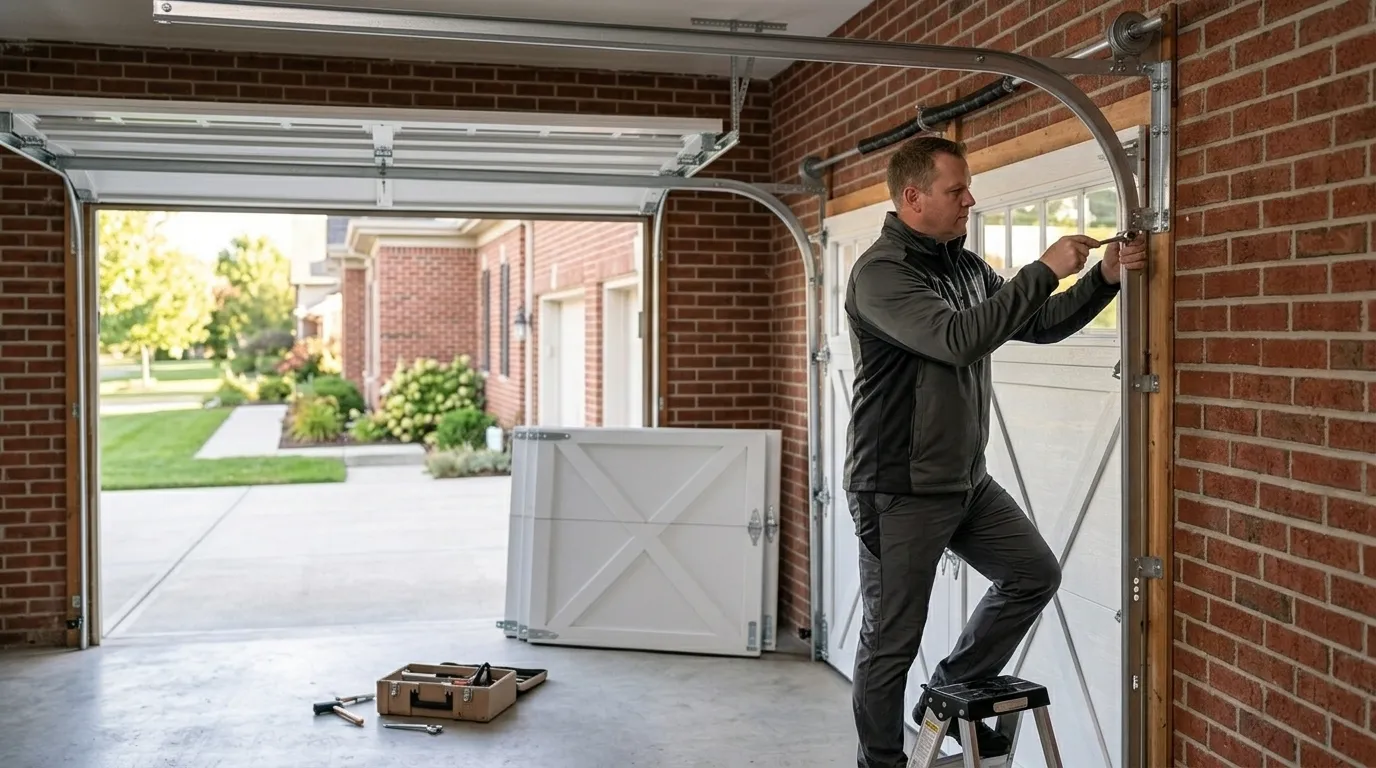
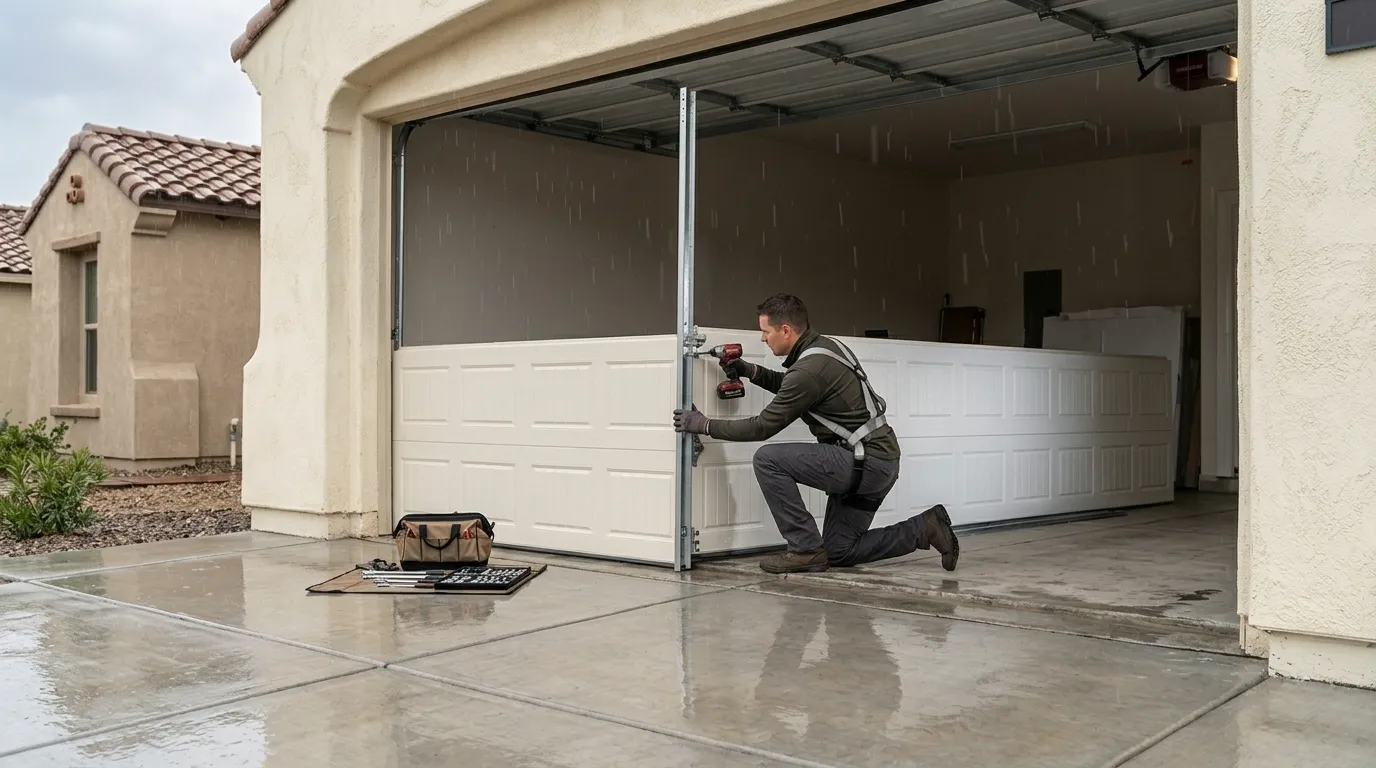
Recent work from this service line.
Why Cedar Park Calls Us
Frequently Asked Questions
How old does my opener have to be before replacement makes more sense than repair?
If your house falls in the common 1980-2014 build range here and the opener is original, parts availability and gear wear usually make replacement the better call once the motor, logic board, or drive gear starts failing. A single sensor or remote issue is often still worth repairing on its own.
Will a new opener work with my existing garage door?
In most cases yes, but we check door weight, spring balance, and header clearance first. Some homes here have upgraded to heavier insulated doors after the original opener was installed, which means the replacement needs a motor rated for that extra weight, not the same size as before.
Does Cedar Park's climate affect how long an opener lasts?
The moderate heat band here isn't extreme, but summer temperature cycling in an uninsulated garage does wear on capacitors and belt or chain tension over the years. It's a slow, steady factor rather than a sudden one, which is part of why openers tend to fail on a fairly predictable age curve.
Can you just add a new opener without touching my old door hardware?
Sometimes, but not if the door is out of square, the track is bent, or the springs are worn. Mounting a new motor on a door that isn't mechanically sound just shortens the new opener's life. We check that first and tell you honestly if something else needs attention before the opener goes in.
Need Garage Door Opener Installation for Cedar Park Homes?
Call now for straight answers on cost and timing.